SINGAPORE: When Dame Uta Frith entertained me there this month with coffee and a home-baked cake, her bookish north London home did not seem easily mistakable for a hornets’ nest. Frith, who at 85 is one of the country’s pioneers of autism research, was in the news for something she had said before, but never with such clarity as in her new essay for the journal Psychological Medicine.
In it, she claimed that far too many people were being diagnosed, or as she would say misdiagnosed, as autistic: a ninefold increase in the 20 years since 1998, according to one study. The autistic “spectrum”, a theoretical concept Frith helped to construct had, she said, collapsed to the point of “diagnostic meaninglessness”.
To illustrate this, she told me that Chris Packham, the TV wildlife presenter who 21 years ago was diagnosed with what was then called Asperger’s syndrome, could not be autistic in her opinion because his brilliance at communication was a “blatant contra-indication”. Perhaps, on reflection, when she said that I did distantly perceive the faint buzz of wasp.
Packham subsequently told The Times that not knowing he was autistic had caused him enormous mental issues and, no, he did not think the condition was overdiagnosed. The journalist Florence Leslie later wrote in these pages that while she agreed with some of Frith’s points, her autism diagnosis had allowed her to accept herself and no longer feel like a failure. A reader wrote gently chiding me for writing that Frith was far too sociable to be on any spectrum herself: her own autistic daughter was “warm, funny and kind”.
On the other hand, two people told me of family members they felt had been wrongly diagnosed as autistic. One correspondent was an “upset and concerned” former paediatric nurse: “At no time has my daughter displayed any autism characteristics and I am sitting here wondering how a diagnosis can be made from one assessment with no parent present to confirm my (adult) child’s account of their childhood.”
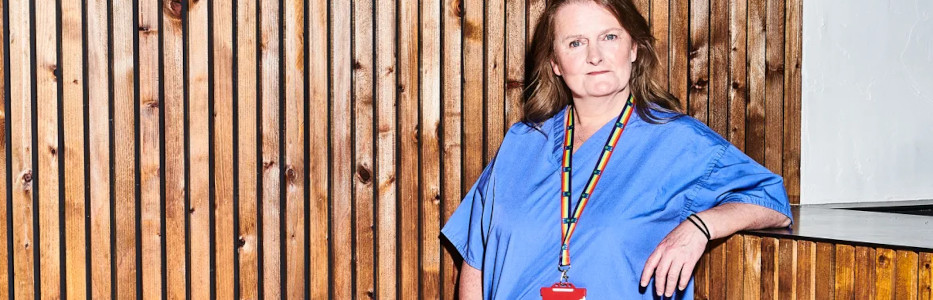
If Frith was outspoken, so — but probably more so — is Mary Doherty, an Irish consultant anaesthetist now affiliated to University College Dublin’s school of medicine. Autistic herself, in 2019 she launched Autistic Doctors International, a group that began with seven members and now has 1,500. With eight other practitioners she has just submitted to Psychological Medicine a riposte to Frith warning that, if put into practice uncritically, her theories could harm autistic people.
Doherty speaks to me on Zoom from the back of her car from the southwest Irish coast, the soothing commentary of its waves failing to quell entirely her outrage at Frith. “She’s completely wrong. She is just so wrong it’s not funny. And it’s embarrassing for her.”
But Frith does not deny autism; she simply wants to chisel away at autism as a monolithic, coverall diagnosis. For her it makes little sense to group together, even loosely, children with a profound inability to read how others think with much more able adults. Some, she thinks, turn to autism to explain quite usual feelings of being an outsider or of being bad at sustaining relationships. Frith wonders whether others are misguidedly inspired by those brilliant autistic detectives we see on television. For Doherty, however, heroes such as The Bridge’s Saga Noren have merely allowed people to recognise themselves and do so without shame.
It was unprofessional, she thinks, for Frith to question Packham’s autism. “There is absolutely no way I would dream of speculating about somebody’s diagnosis,” she says. In any case, to her, Packham’s autism is obvious. “As autistic people, we recognise each other. We just do, you know? Not all the time. It’s not infallible. But there are certain things about being autistic — if you see somebody doing something, or a way of speaking or even a way of thinking — you just recognise it.”
I ask whether she thinks Frith has damaged just her own reputation or whether she has unleashed a backlash against society’s increased acceptance of autism. “Both. It’s not the beginning. This backlash has been happening for a while, and it is a backlash because, suddenly, articulate autistic people are speaking out.”
But Frith is less interested in people speaking out about who they really are. She would prefer their symptoms to be objectively assessed. Part of the huge increase in diagnoses, she thinks, could be down to people filling in their own medical questionnaires, for self-reporting is inherently fallible.
“Well, is it?” Doherty retorts. “Because you know what’s interesting about all this? It’s that traditionally the diagnostic process [of autism] has been based on behaviour, with absolutely no taking into account of internal experience. It’s the only diagnosis I can think of in the whole mental health field where that would be the case. If somebody is experiencing anxiety or psychosis or OCD [obsessive compulsive disorder], you want to know what’s going on internally. You want to know how they feel. You want to know what they’re thinking.”
So why have rates of diagnosis rocketed? Why are there so many autistic people these days? “Why were there so many left-handed people after teachers stopped tying their hands behind their back? Why were there so many gay people after it stopped being criminal? You know, we were always there, always. I mean, how many are we allowed to have?”
I ask her to give her best estimate of the proportion of autistic people in a population. “Probably 3 to 5 per cent,” she says. Five years ago the World Health Organisation, I later check, put the number at 0.79 per cent.
Last week it was reported that the amount being spent by the NHS on autism and ADHD diagnoses had risen tenfold in the past year. There are 800,000 people on NHS waiting lists for ADHD assessments and private clinics are charging the NHS up to £3,000 per patient to carry these out. One NHS leader said the “soaring costs are running out of control”.
Doherty received her diagnosis in 2013, aged 45. It followed her son’s autism diagnosis the same year. Her undiagnosed autism had been debilitating. Although she worked in a hospital as an anaesthetist, when faced with the possibility of having cancer she delayed for a year booking a biopsy by phone because of the unpredictable conversation that would follow. She walked from a waiting room before a consultation because of the “sensory onslaught” of the hospital. (In the end her GP made the appointment for her and her skin cancer was successfully treated.) She worried that being diagnosed autistic might end her medical career but instead found that owning her autism helped her relationships with colleagues. Later she discovered she was “queer”. Was that part of the same process?
“I think so, possibly. Yeah, for sure. But from that point of view, I know what it’s like to suddenly have a realisation that everything you thought about yourself was wrong? It was glorious. It was wonderful. It was probably the best discovery. It was fantastic. But I wish I’d known years ago, in the same way I wish I’d known years ago that I was autistic.”
Her daughter, now 32, was also diagnosed as autistic in adulthood, after six years of “absolute hell” dealing with mental health difficulties. “I know so many people personally, not just my daughter but lots of people, who would have been really heavy users of mental health services: you know, suicide attempts, self-harm, serious mental illness. And then they get an accurate autism diagnosis and they thrive.”
To summarise Frith and Doherty’s disagreement, the question seems to me to be whether autism indeed covers a spectrum or whether autistic symptoms are so different and their intensity so variable that some deserve diagnostic categorisations of their own. Doherty, for instance, has met and conversed with non-verbal autistic people but is herself highly articulate and socially skilled. As we talk, her only autistic “tell” would be that she plays with a hairband; this she calls “stimming”, although the world contains many neurotypicals who worry with beads or jerk their legs rhythmically when nervous.
Judging autism by how people present is difficult anyway, since many autistic people deliberately mask their autism to fit in. “I often say I speak neurotypical pretty well but it’s like a second language,” Doherty tells me. Yet as one of the mothers who wrote to me said, autistic people can be naturally funny and warm. Doherty says of herself: “There’s a lot about being autistic which I think is kind of bimodal. I think what you find in terms of empathy is there are a lot of us that will be hyper-empathic with really intense empathy. And I am in that category.”
For Doherty to be correct that autism is one condition with many shades there must, surely, be some characteristics shared across the spectrum. Frith and she agree on one thing: there are probably genetic components to autism (although they disagree on whether or not that makes autism inheritable). Doherty believes autism tends to come with co-morbidities such as gastrointestinal problems, epilepsy, hypermobility and allergies: “The big misconception in the field is that autism is a brain difference. It’s not. It’s a whole-body difference.”
Above all she would say, there is a problem with sensory processing, an intolerance of cacophony, bright lights and unpredictable environments (such as hospitals). “For me, that is without a doubt the most disabling aspect of being autistic. I have no difficulty in identifying as disabled and I absolutely am, and it’s mostly because of sensory differences.”
And does that apply to every autistic person? “Does anything apply to everybody?” She recalls her “autistic meltdown” a few years ago, a “sensory nightmare” at a venue where she was to give a talk. “It just got to a point where I literally could not access fluent speech. On a really bad day you will not see a difference, in terms of my ability to manage safely to communicate, between me and someone who needs full-time care in that moment.”
So when diagnosing someone with autism, a specialist should take into account their worst moments? “Absolutely. Absolutely.”
At heart, then, does Doherty believe all autistic people are of the same tribe? “Without a doubt.”
As it happens, the week after we speak, Autscape, an annual three-day conference for autistic people, is being held in Hertfordshire. Hundreds attend, and the only guests who will be struggling, Doherty says, are the neurotypicals. Otherwise a party mood prevails in which autistic people stop masking. I ask whether there is some hooking up. “Oh, completely, yes. It’s fantastic because the expectations are different. There’s no small talk. There’s no social niceties. You can be in the middle of a conversation and duck out — it’s fine.”
An enterprising documentary maker, I think, might ask Frith to go along next year and record what conversations ensued. They might not all be confrontational. Both sides of the argument certainly mean well, and Frith has since written to me to say that she now realises she crossed a line by discussing Chris Packham: “I very much regret what I said.” And, Doherty, who has exchanged emails with Frith, says she would love to chat to her. “I do have compassion for her. I do understand where she’s coming from. But, ultimately, I think she’s completely wrong.”