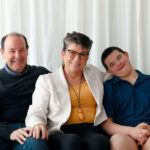
SINGAPORE: For seven months, Littleton’s Disability Innovation Hub offered a space for people of all ages with neurodivergence and intellectual and developmental disabilities (I/DD) to meet one another, connect with specialists, and enjoy activities like sensory swings and board games.
Recently, the hub has even helped aspiring filmmakers create a film with the help of SeriesFest, a Denver organization that supports local emerging storytellers.
The hub ran on membership — those who wanted to come to the hub for activities, socializing, help with employment, or to rent an office space could pay an annual, monthly or daily fee to grant them access to the space.
“We didn’t get the level of membership that we had hoped for,” said Maureen Welch, the hub’s executive director.. “I think some of that is due to the political and economic climate right now. People are rightfully afraid, losing so much funding with Medicaid cuts here in Colorado.”
With recent reconciliation efforts to reduce federal spending and as Congress continues to debate extending subsidies from the Affordable Care Act, Medicaid is on the line for many.
According to state data, 1,221,806 Coloradans — or about a quarter of Colorado residents — were enrolled in Medicaid in November 2025.
Despite having fewer enrollees on Medicaid compared to other populations in Colorado, people with disabilities on Medicaid spend the most in the program.
“I opened the space expecting it to thrive, but none of us had a crystal ball to know the incredible cuts impacting our community coming down from the state,” Welch said. “The governor’s executive orders on Aug. 28 and Oct. 31 and the subsequent impacts have been paralyzing.”
In October, following the August order that allowed Gov. Polis to cut spending on services with inadequate revenue generation, Medicaid spending was reduced, including capping caregiver paid hours with a reduced pay rate.
“The hub was an amazing concept and effort, but was unfortunately not sustainable in the current environment,” the closure announcement from the Disability Innovation Hub said. “So there will be a pivot of sorts that will actually better meet the needs of the community.”
That pivot will be Karuna Care Services (KCS) taking over the old hub space at 5984 S. Prince St., Unit 101.
KCS worked with the hub to serve its members and is a Program Approved Service Agency — a state-approved organization that can provide services to people with I/DD, which can be billed through Medicaid via its waivers — and provides residential, day and behavior support services.
The organization primarily serves the Boulder area and is expanding to the south metro area with its expansion into the old hub space.
“Through a variety of comprehensive funding models, KCS offers multiple residential options, including family caregiver, independent living, and host home models,” said Erin Davis, the director for behavior services at KCS. “Our expertise also extends to community-based supports, where we currently provide supported community connection, behavior supports, and specialized habilitation services. Supported employment services will be launching soon, further expanding our commitment to helping individuals live meaningful, independent lives.”
Davis said the new space KCS is taking over will continue to be a place to serve neurodivergent individuals and those with I/DD.
“It will be used for trainings, specialized habilitation services, group meetups, and as a starting and ending point for supported community connections,” Davis said.
Efforts to begin serving the south metro community are already underway, with KCS teams moving into the area and setting up consultations and onboarding clients and their families.
Those who are interested in becoming a client of KCS can visit karunacareservices.com or email Meagan Rountree, KCS’s marketing and intake manager, at intake@karunacareservices.com.
Welch is also the founder of Navigating Disability Colorado, which helps people understand Medicaid waivers and how to apply for them.
In the months the Disability Innovation Hub has operated, Welch said she loved hearing members say they’ve “found their people,” and is proud to know the hub has encouraged the disability community to support itself.
“That is empowering. We can be interdependent instead of dependent,” she said.