SINGAPORE: A Queensland couple has opened a first-of-its-kind recovery village to help eating disorder survivors ease back into their normal lives without relapsing.
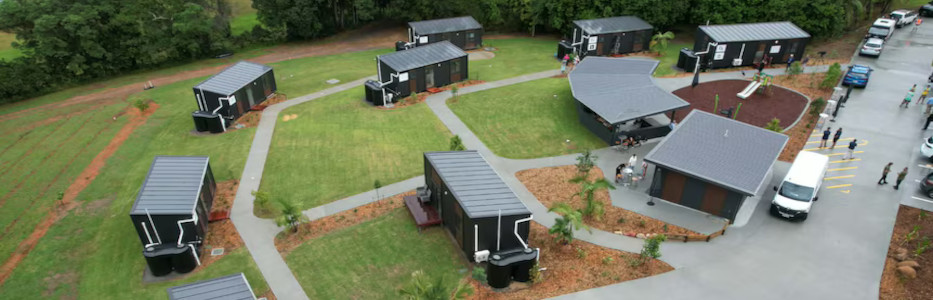
Mark and Gaye Forbes, co-founders of eating disorder support service endED, have developed the eight-unit village to provide short-term, supported accommodation for those not yet ready to return home.
After supporting their own daughters through life-threatening eating disorders, the Forbes built a recovery pathway — from residential treatment to day programs, and now, supported living.
“In Australia, more people die each year from eating disorders than from the national road toll,” Mr Forbes said.
Between tears at Wednesday’s launch, former Olympic swimmer Lisa Curry said the new village on the Sunshine Coast would be “truly life changing for some people”.
She said Australia needed more facilities like it.
She lost her daughter, Jaimi Lee Kenny, to an eating disorder about six years ago.
“My daughter Jaimi would have loved this place,” she said.
“It’s come too late for her and many other kids as well.”
Ms Curry said it was an important place for families and would provide an “in between” for those not sick enough for the hospital but too sick to go home.
“Some people live with this disease forever,” she said.
The village could support up to 60 families throughout the year, with patients able to stay for up to 90 days, although they would be welcome to return later for further treatment.
Each home is self-contained with a shower, toilet, cooking facilities, and fridge.
The Forbes hoped the model would be replicated across Australia.
While people would not leave the village “fully recovered”, Mr Forbes said they would be on their way to recovery.
“A lot of times, it walks with you throughout your life, but you learn how to manage it,” he said.
“Our team provides those tools on how to manage that walk and live the best life you possibly can with it.”
Mr Forbes said the village’s communal areas, including a barbecue, laundry, children’s playground, and community produce garden, were about “integrating with nature, community and not feeling alone”.
Support services would include community group outings, meal support to navigate food challenges, trauma-informed yoga, and peer and carer support via telehealth.
The state government invested $1.9 million into the project.
“There is no way we as a government could provide these services to everyone who needs it,” Premier David Crisafulli said at the launch.
“I’m mindful that so many people fall through the cracks every day, and an investment like this for us is a really worthwhile one — not just medically but also socially.”
The Forbes family first founded a home-like residential eating disorder treatment facility in Mooloolah Valley — Wandi Nerida — now operated by the Butterfly Foundation.
Their second initiative, House of Hope, supported people between intensive treatment and full independence.
The former nine-bedroom property in West Woombye was turned into therapy and support spaces and staffed by qualified people with lived experience of eating disorders.
After suffering from an eating disorder 10 years ago, Tayla Clegg, 26, has taken a job at the recovery village as a dietician.
The former athlete said her disorder “began with the most innocent and subtle of changes” that “very quickly” harmed her mental and physical wellbeing.
Ms Clegg said her disordered eating was initially seen as “disciplined” and “going all out for the sport”.
She said the most common misconception about eating disorders was that someone living with one had to look a certain way.
“It’s not necessarily just about appearance … it’s about so much more than that,” Ms Clegg said.