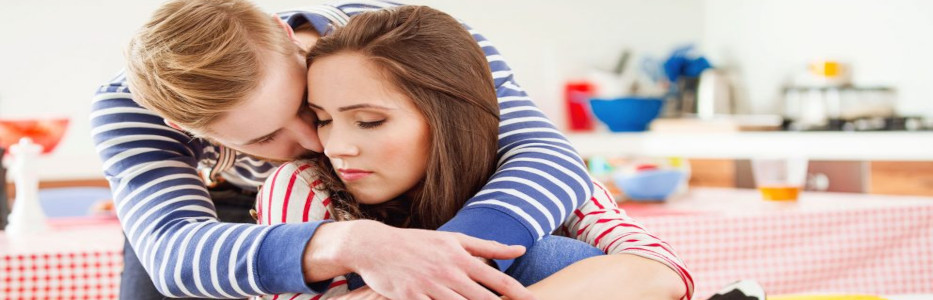
SINGAPORE: Navigating a romantic relationship requires communication and compromise at the best of times – but what happens when your brain is wired completely differently to your partner’s?
Whether managing the unique communication styles of autism and ADHD, the internal hurdles of severe OCD, or the highs and lows of bipolar disorder, five Australians open up about the realities of modern romance.
They lead by example in proving that a different brain structure isn’t a barrier to love – rather, it is a blueprint for deeper connection.
‘We have ADHD and autism – this is how our marriage works’
Daniel Hook and his wife Danielle Kutchel had been together for over a decade before they each discovered their neurodiversity.
It was a “throwaway comment” by a family member that brought the idea to their attention.
“My sister-in-law looked at us and said I had ADHD and Danielle had autism,” Mr Hook, 35, said.
“It had never crossed our minds, but we did some research and began to agree very quickly.”
After consulting qualified health professionals, Mr Hook was diagnosed with ADHD just over three years ago. Shortly after, Ms Kutchel was diagnosed with autism.
They said their strong 17-year history helped them navigate the process later in life.
“There were a lot of tears, and we would think to ourselves, why were we missed? How did we fall through the cracks?” Ms Kutchel, 34, said.
“But at the end of the day, I had someone to come home to who I trusted and who would be there for me no matter what.”
The couple were initially concerned that their diagnoses, and the medication prescribed as a result, would change their relationship dynamic – but Mr Hook said these fears were “unwarranted”.
“Everything we learned throughout this period has strengthened our relationship and brought us closer because we understand each other better,” he said.
For example, Mr Hook now recognises his wife’s triggers, while Ms Kutchel understands how to better communicate with her husband.
“We’re very opposite in a lot of things, like when it comes to living together,” she said.
“I’ve learned to be a lot more mindful of my communication, and especially how and even what time of the day I express things to him.”
They said taking the time to learn about the other’s neurodivergence has been important.
Even though they may not “completely understand it”, they accept that their brains don’t work in the same way.
“I’m so excited by the way his brain works, I often don’t get it but it fascinates me,” Ms Kutchel said.
“I love that he challenges how I think and perceive things – I’m a very rigid person, whereas he’s very spontaneous – and that really does make life fun.”
Mr Hook agreed. “It’s really nice to have an opposite to bounce off,” he said.
“Our relationship doesn’t seem to be the same as a lot of our friends, but that’s okay because it works for us and we’re committed to it.”
‘We’re a neurodiverse family – this is our main challenge’
Christina Keeble said it was her husband Simon who first encouraged her to explore whether she might be neurodivergent almost one decade ago.
The 46-year-old said she could not identify why she was struggling to parent at the time.
“Before children, I’d set up my life in a way that worked for my needs intuitively, but children do a great job of shaking that up,” Ms Keeble said.
“I didn’t realise how much recovery time, sleep and non-speaking time I required to be okay the next day.
“It took a toll on my mental health and my husband encouraged me to seek diagnosis.”
At 37, Ms Keeble was diagnosed with autism and ADHD – commonly known as AuDHD.
She said the label had a profound impact on her identity.
“It allowed me to fully understand myself, to love myself and most importantly to forgive myself for how hard I’d been to me in the past,” Ms Keeble said.
She also said it was “positive” for her marriage to Simon, 56, although it has not come without challenges.
“The main challenges for us has been the difference between how we communicate,” she said.
“But my diagnosis has allowed us to realise that some of the little things we argue about are actually connected to my neurodivergence.
“We have since learned about each other’s communication styles, needs and worked out strategies to support each other.”
Ms Keeble said receiving a diagnosis was “hands down, the best thing” she has ever done, particularly because it meant she could start medication, which has been “life changing and life saving” for herself and her family.
Ms Keeble and her husband have two kids, now aged 13 and 15, who are also neurodiverse.
She said parenting kids with neurodivergence while having AuDHD herself created a unique sense of connection and solidarity.
“Even when we mess up as parents – as all parents do – the kids understand because they struggle with some of the same things,” she said.
“We know what they are going through, so we are able to relate to their challenges, experiences, and even the depth of their passions and interests.
“There is a commonality and that connects us, even when the outside world feels unsafe.”
‘I have OCD – this is why I was petrified to have a family’
Angie Greene said she was “really nervous” to tell her husband Sam that she lives with both ADHD and Obsessive Compulsive Disorder (OCD).
“The reality of our relationship is that OCD at times has really taken a toll,” said Ms Greene, who has been with Sam for 13 years and married since 2022.
“I didn’t tell him when we first got together, it only happened because I had a really bad episode and I had to explain why.
“I also held off telling him about my ADHD because I didn’t want it to be another thing that took up so much of our energy and time.
“But he was just beautiful – how he’s dealt with my brain has been incredible.”
Ms Greene, 39, said she has “never known life without OCD” but was only formally diagnosed at 19, while her ADHD diagnosis came this year.
She said her experience of OCD is “profoundly worse” than her ADHD – mostly because the mental health condition remains widely misunderstood and stigmatised.
“It feels like I have a broken brain, I find it insanely lonely,” she said.
Ms Greene said couples who are navigating neurodiversity and mental health conditions need to foster a strong sense of trust in their relationships.
She said she knows Sam will never “fully understand” her, but he “does his absolute best”.
“I’ve accepted that he respects and empathises with me, but he will never properly get it,” said Ms Greene, who co-hosts the OCD podcast It’s Not What You Think.
“All of my compulsions are internalised so Sam can’t actually see it – he just sees me going to work, raising our kids, having a smile on my face.
“I do understand how some relationships don’t survive this and I’m incredibly lucky and grateful that I have a partner who is a safe space for me.”
Ms Greene said her anxiety also peaked when they were thinking about starting a family because she was worried about burdening her kids with the same challenges she faces.
Today, the couple have two children, aged six and four.
“I really wanted to build my own family, but I was so petrified of giving them this,” she said.
“I had to reframe it to think that if they do get it, then I’ll be the safest and most knowledgeable person they could be around.”
‘I’m bipolar and dating – this is how it impacts my search for love’
Dov said his bipolar disorder has “never been an issue” in the early stages of dating – but it has created challenges as his relationships progressed.
The Melbourne-based doctor, who is currently single, has been in two-long term relationships that lasted nearly three and nine years respectively.
He said his partners have had “varied” responses to his mental health episodes.
“One partner found it very difficult to deal with,” Dov, 42, said.
“There was a temporary separation, and he moved out of home, which was really difficult.
“The other partner was like an angel and kept reiterating that he could only see the real me.
“I think the response depends on the emotional intelligence of who you’re with, how deep their love for you goes and how far they are willing to see you beyond your affliction.”
Dov said he is open about sharing his bipolar disorder in his romantic relationships, and commonly found people to be either be “inquisitive” or “surprised”.
“I don’t carry around my diagnosis as a shameful thing, but the timing needs consideration,” said Dov, who is a mental health advocate and SANE Peer Ambassador.
“You don’t have to reveal everything in early dating, but once it’s going to a place of intimacy, then I would have no qualms discussing it.
“I’m always willing to educate my partners about bipolar disorder because it really strikes down those barriers of ignorance.
“If someone’s got a problem or expresses discomfort, then I’d rather know because I can’t change my genetic makeup.”
Dov was 19 when he was formally diagnosed with bipolar disorder after experiencing his first hypomanic episode two years prior.
He credits self-care, including routine exercise, sleep and downtime, and also having a good response to lithium – the “gold standard” medication for bipolar disorder – for helping him live a “meaningful and well-balanced” life.
Dov said his bipolar disorder is the reason he is so empathetic and compassionate, and believed being in a relationship with someone who has a “different brain structure” to your own can be advantageous.
“We live in a society where you have to conform, and if you don’t, you are given a label – but there are limitations to being labelled,” he said.
“I’m someone who feels and thinks deeply, I just happen to have a different set of challenges to what everyone else is dealing with.”
‘I have ADHD – this is why it can lead to fights with my boyfriend’
Katya said it was initially difficult for her partner to recognise and accept her “big feelings”.
The 19-year-old Melburnian has ADHD and said her neurodivergence has impacted her romantic relationship.
“If I’m overstimulated or I forget to take my medication, then I can have disproportionate reactions, and it’s taken a long time for him to be okay with that,” said Katya, who has been with her current partner for almost three years.
“He’s gotten pretty good at knowing that it’s not really how I want to be feeling but it’s all I can manage emotionally in the moment.”
Katya said her ADHD makes her a more “understanding and empathetic” partner because she “thinks and feels a lot more deeply”.
But she said it was important for her to be able to trust her partner and not feel forced to hide her emotions in their relationship.
“A key element of ADHD in girls is masking, where you feel like you have to make yourself smaller in order to fit in,” she said.
“But I can trust him to be okay with me having big feelings and a loud personality.”
Katya was formally diagnosed with ADHD three years ago when she found herself struggling to maintain focus at school.
“I had an idea that I had ADHD but once my grades slipped, that’s when other people thought there was merit to what I was saying,” she said.
Katya was also diagnosed with anxiety and depression as a teenager, and had an eating disorder. She said her neurodivergence made her mental health worse.
“My ADHD did contribute to anxiety at school, especially with my friends,” Katya said.
“It made it quite hard to make and keep friends, and I think that’s why it went undiagnosed for so long because it did just look like friendship issues.”
She credited apps like Kaboose, designed for people with neurodivergence, for widening her friendship circle and dating pool.
“I do connect strongly with people who either are diagnosed or probably should be diagnosed with some sort of neurodivergence,” she said.
“It’s just this shared understanding that everybody has it, and they actually get it and get you.”
Relationship experts reveal why they commonly see people with ADHD having affairs
Relationship experts say they commonly see people with ADHD having affairs, citing their impulsivity, susceptibility to burnout and difficulty regulating emotions as contributing factors to their infidelity.
They also said affairs were more prevalent in neurodiverse relationships with poor or incompatible communication styles.
Clinical psychologist and relationship counsellor Phoebe Rogers said men with ADHD were more likely to cheat.
“It’s usually men who have gone online or downloaded dating apps to seek that dopamine hit,” said Ms Rogers, who has over 15 years’ experience.
“We do know that there are important brain structure and neurochemical differences in people with ADHD – such as dopamine dysregulation, differences in executive function and frontal lobe activation, impulsivity, and emotional regulation.
“It is often the case that people with ADHD become stressed and don’t know how to handle it so they disconnect from their relationship.”
Ms Rogers said communication differences contributed significantly to this problem, particularly in heterosexual couples where only one partner is neurodiverse.
“Typically, I see men with ADHD who come home after working hard all day and need to tune out and recharge,” she said.
“While women, generally speaking, might be wanting more emotional connection and interest from their partner, and that can lead to the man feeling like he’s not enough.
“He can become highly defensive, particularly when there is rejection sensitivity involved, and tension can escalate quickly.”
Robyn Blake-Mortimer, a clinical psychologist and neurodiverse couples therapy expert, said affairs were common in all relationships – but particularly for people with ADHD.
“ADHDers can have a pursuit of novelty and excitement, and are often impulsive,” said Ms Blake-Mortimer, who has been working in the field for more than two decades.
Ms Blake-Mortimer agreed that poor communication exacerbated this problem.
“Normally ADHDers are reluctant to talk about their unhappiness or conflict, or when they do, it goes nowhere,” she said.
“That sets the pathway for this slide into not necessarily seeking out an affair, but absolutely being vulnerable to it.”
Neuroscientist Jane McFadden has spoken to thousands of women through her ADHD Mums podcast and “absolutely agreed” that affairs were frequent in ADHD couples.
Ms McFadden said an ADHD diagnosis puts “a lot of pressure” on relationships and can cause burnout.
“An ADHD mum might have poor executive function themselves while still needing to play the personal assistant role for their family, or they might have a partner with ADHD who struggles with task completion and procrastination so she has to take on more,” she said.
“This can really build up resentment, burnout and stress in a relationship.”
Nick Tebbey – national executive of non-profit Relationships Australia – said he has not seen a difference in the rates of affairs between ADHD and neurotypical couples.
However he did acknowledge that people with neurodiversity may look to cheat if they are not able to effectively communicate with their partner.
“In a relationship, we’re seeking to be seen, understood and valued,” Mr Tebbey said.
“If we have brains that work in different ways and react differently then there can be challenges, like feeling misunderstood, overly defensive or saying something too bluntly.
“We can then find ourselves looking elsewhere for that connection.
“It all comes back to being willing to have open, honest and non-judgmental communication.”