SINGAPORE: A new book about growing up with an autistic brother finds the funny side of a challenging situation – including the Vegemite Parrot Incident and Great Icecream Robbery
“Why’s your brother acting so weird?”
I got asked that question so regularly as a kid that by the time I was six I already had a rote answer: “Rob’s autistic. His brain works differently and he doesn’t talk the way we do.”
Most siblings of people with complex support needs get used to answering these sorts of questions pretty early on. Other regular questions included:
“Why can’t he talk? What’s wrong with him?”
“Why does he put his fingers in his ears?”
“Um … should he be naked?”
My experience as a sibling saw me assume the role of a less upbeat Clippy (the helpful paperclip from Microsoft) – but instead of explaining how the computer works, I would pop up to explain my brother’s behaviours and needs:
“I see you’re trying to understand behaviours you’ve never seen before. Can I help with that?”
“Hey there! Did you know that that sign means he wants you to go away?”
“It looks like Rob is regulating his sensory input. Let’s ask him to put on some comfy clothes!”
My brother is autistic and also has an intellectual disability. He is vocal but not verbal, which means he doesn’t use words to talk but instead uses his own sounds, body language and ‘vibes’ to get across what he wants and needs.
As a result, from a young age I became a conduit between my brother and the rest of the world. Like a lot of siblings, I also fell into a carer role (from about the age of four), driven by both my love for my brother and my desire to help my parents.
Stories became the best way to communicate what life with Rob was like – told to loved ones, to curious friends and to support workers.
As a family, we had a repertoire of favourite anecdotes like “Escape to the Neighbours!” or “The Sanitary Pads Debacle!” or “The Vegemite Parrot Incident!” that we’d regularly trot out to highlight Rob’s specific personality, behaviours and support needs.
Sometimes these stories were mundane, like when you have to sit in the car for hours, waiting for Rob to be ready to go into a new venue. (Don’t forget to pack your favourite sketchbook and pens.)
Sometimes the stories were scary, like when something would set Rob off while we were driving and he would reach forward from the back seat and pull my hair or pinch and bite me. Or even grab for my Mum while she was driving and pull her back against the chair.
Sometimes they were frustrating, like how home life can feel so overwhelming and unfair that you get angry and sad, but then you feel really guilty for feeling angry and sad when you know it’s not anyone’s fault.
But a lot of the time these stories were funny, like when Rob helped us meet our new neighbours by sneaking into their kitchen via the roofs of our two houses to snaffle their ice cream.
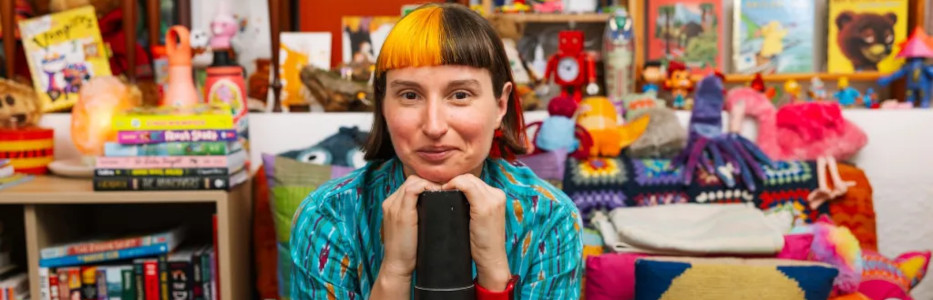
Much of this “family lore” has found its way into my graphic novel memoir, Oh Brother. I wrote it because, growing up, I never saw my experiences reflected in any media. I was desperate to see our home life in a book, one that I could connect to and share with my friends.
I hope now that Oh Brother can be that book for other siblings in similar situations. Of course, I know that there is no definitive sibling experience – like all human relationships, they vary widely and also fluctuate and change over time.
My story is just one in an ocean of wonderful, hard, frustrating, funny stories out there.