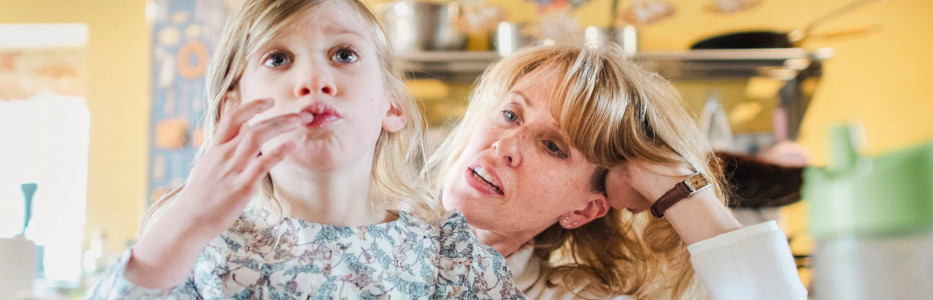
SINGAPORE: Critics blame pushy middle-class parents for rising diagnoses, but the reality is years on hospital waiting lists and costly battles for support
Reading Prof Peter Fonagy’s independent government review into mental health, ADHD and autism had me not just punching the air but weeping with gratitude. Much of what he says is manna from heaven for parents like me, at the sharp end of raising and advocating for a child with ADHD and autism, two complex and often hugely challenging neurodevelopmental conditions.
Far from trying to “game the system”, as some people seem to believe, negotiating it on behalf of my seven-year-old daughter, Romy, has, to date cost our family tens of thousands of pounds, effectively taken me out of the workforce and pushed me to the brink of madness. And yet Romy still isn’t, to use the official jargon in which I’ve had to become fluent, having her educational needs met, so we have been forced to take our local authority, Norfolk county council, to tribunal. Shockingly, this is the norm, not the exception, for families like us.
So to see an independent government report by a respected clinician shoot down the cod psychologists, commentators and keyboard warriors who claim these conditions are over-diagnosed and “fashionable”, with rates only soaring because of “pushy” middle-class parents obtaining private diagnoses, is a blessed relief.
Difficult beginnings
Autism and ADHD weren’t on our radar for the first few years of Romy’s life. We were preoccupied by the cerebral palsy diagnosed when she was just two days old. Romy had the most terrible start to life. After a textbook pregnancy, she was born via an elective caesarean at 39 weeks. By the time I came round from the general anaesthetic, she was in neonatal intensive care, suffering seizures, where she stayed for a month.
We’re convinced that to have suffered this degree of brain damage, something must have gone wrong in the delivery room, but we will never know. Medical negligence is hard enough to prove when you’re awake throughout. But I know I carried a healthy child to term – and they damaged her in some way.
The prognosis was dire: doctors said she would probably never live a normal life and would be quadriplegic. But with intensive physiotherapy, Romy confounded expectations. She met all her physical developmental milestones later than her brothers. Cognitively, she was perfectly bright, though she had a significant speech delay. Because of her disability, I applied successfully for an education, health and care plan (EHCP), the legal document for children with special educational needs (SEND) who need more support than standard schools can provide.
But then, at around the age of three, Romy started having meltdowns that dwarfed the usual toddler tantrums. Screaming that would go on for hours. At this point we were still, mistakenly, attributing all this to cerebral palsy.
Though she attended a mainstream nursery, on starting primary school Romy’s behaviour fell off a cliff. Minutes into a task, she would be completely lost and overwhelmed and run, screaming, out of the classroom. While I had suspected ADHD for a while, in a lightbulb moment, I realised that Romy’s issues fitted the autism spectrum disorder profile. And that’s where the real fight for help began.
To those doubters who dismiss autism and ADHD as fashionable diagnoses that middle-class mothers are seeking out, know this: I cried for a week when I realised that my sweet, funny, loving little girl was probably autistic. Hadn’t she, I raged, been dealt a bad enough hand at birth?
But getting a diagnosis was an uphill struggle. Romy’s paediatrician agreed she probably had autism and ADHD and referred her for official assessment – with the stark warning that the NHS waiting list was up to six years.
So while we languished at the bottom of the list, Romy’s school suggested an emergency EHCP review meeting with the local authority (LA). Her teachers said that to stay in mainstream education, she would need higher-level support than they could provide. We would need to get the woolly wording of the EHCP – “Romy will need a high level of adult support” – changed to specify 15 hours of funding a week for a one-to-one support worker.
But Romy’s EHCP co-ordinator didn’t even turn up – and only answered my emails when I threatened legal action. Despite all the evidence from the people who knew our daughter best – teachers, doctors, therapists and parents – the LA insisted she didn’t need additional support.
At this point I realised we would need to hire a specialist SEND lawyer to negotiate the Kafkaesque SEND system. To this day, the woman at the LA who takes these decisions about what Romy needs has never even met her.
After two years on the assessment waiting list, I gave up on the NHS: Romy was now 6 years old and couldn’t wait any longer for help and support. All the evidence is that early intervention gives a child the best outcome. She was diagnosed privately at the beginning of this year, following several extremely thorough assessments at a clinic in Cambridge.
Private diagnosis isn’t cheap, and I’m thankful that at least my husband has managed to retain a decent job so we could go down this route, which has cost us in the region of £5,000. If you can’t go private, your child will be left languishing on what’s called the “autism pathway” for years. You won’t have an outside chance of accessing the right support or securing a place at a school that meets their needs.
A common charge thrown at parents like me is: “Of course a private clinic is going to say what you want them to.” Well, no parent wants or chooses for their child to be autistic or have ADHD. You cry a lot when you have a disabled child, often with rage and frustration at their behaviour and at the SEND system that isn’t fit for purpose. But sometimes you cry simply because their plight is so horribly unfair.
Thankfully, the eminent consultant child psychiatrist Dr Anna Conway Morris and her team at the Cambridge ADHD & Autism Centre were excellent and empathic, with a forensic insight that illuminated parts of Romy’s character and conditions I hadn’t even considered. They assessed for ADHD first, the doctor quietly explaining that Romy’s symptoms, such as her impulsive and hyperactive behaviour, were so acute (in the 99th percentile) that they couldn’t do all the tests they needed to diagnose autism without first treating the ADHD.
I was blindsided when it was gently advised that we medicate our 6-year-old. Like many critics, I had been guilty of a rather classist view of ADHD: that it’s down to poor parenting, too much screen time. And yet here it was, in a loving middle-class home full of books, boundaries, Radio 3 and children who have never been allowed tablets, smartphones or even a games console.
We decided against stimulant meds such as Ritalin, as Romy is very slim and I was concerned about their appetite-suppressing effects. Now we have to give her a giant Calpol-type syringe of a foul-tasting liquid called atomoxetine every evening, and it breaks my heart when she asks: “Mummy, how long do I have to take this for?” or pleads: “Please, no, not again.” It feels tantamount to child abuse, though we can see it working miracles.
Within a few weeks of starting medication, it was as if the pneumatic drill driving Romy’s brain finally slowed down. Her doctors were able to run the tests they needed to diagnose autism. Her teacher reported a dramatic improvement in her focus, and while she can’t sit still for a whole lesson, she can manage a good 10 minutes before her mind wanders and she needs a “movement break”. She is making strides in reading, writing and maths where, a year ago, aged 5, she wasn’t even able to sit a phonics test.
Prof Fonagy’s idea that children should be able to get help without an official diagnosis is a lovely idea, but I’m afraid it’s pie in the sky. My daughter has official diagnoses, ADHD so acute she needs medicating and an EHCP, yet our LA continues to maintain that my daughter needs no additional support.
Two years on, we have been forced to go to tribunal to get the educational support Romy is entitled to by law. Our case is listed for April 2027 and, so far, this fight has cost us more than £15,000 in legal fees.
I have Romy out of school one day a week so she can have an hour of private speech therapy (for which we pay £85 because our LA claims she doesn’t need it) and a two-hour session with Rachel, a highly skilled SEND tutor (£80), with whom Romy has made huge progress. It shows that, with the appropriate support, she can focus and learn. Gradually she is catching up with her peers.
In Prof Fonagy’s report there is a wisdom and kindness that has largely been lacking in this polarised debate. Policymakers and doubters would do well to remember that for every diagnosis of ADHD and autism, there is a person – often a young child – at the core who is struggling. And a family around them doing their best not to fracture.